
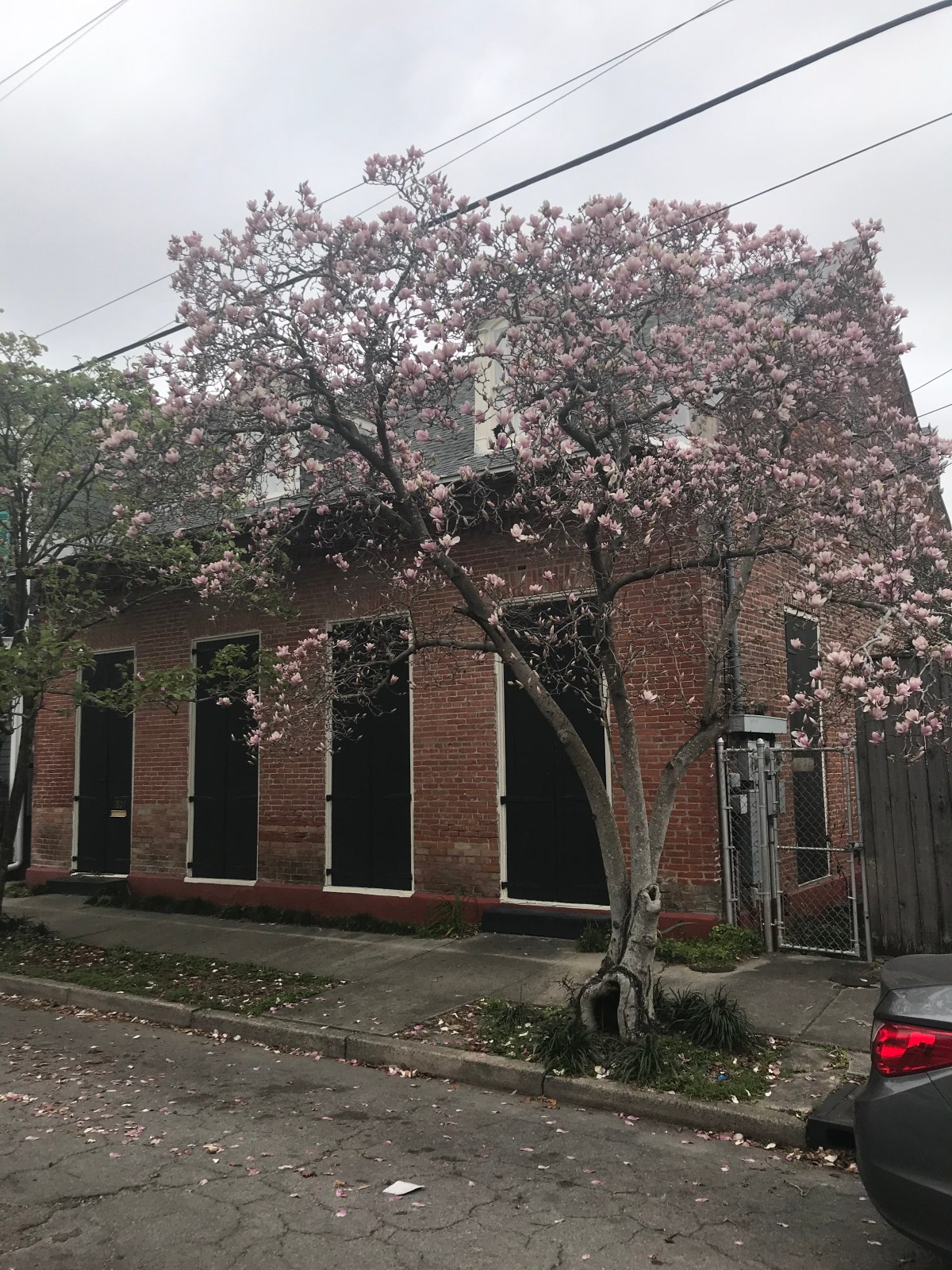
Many months in the past, pre-Covid, my husband and I took our second trip to New Orleans. We went several years ago with our kids, and because we brought them, the trip was during the summer. It was hot of course, but we loved it!
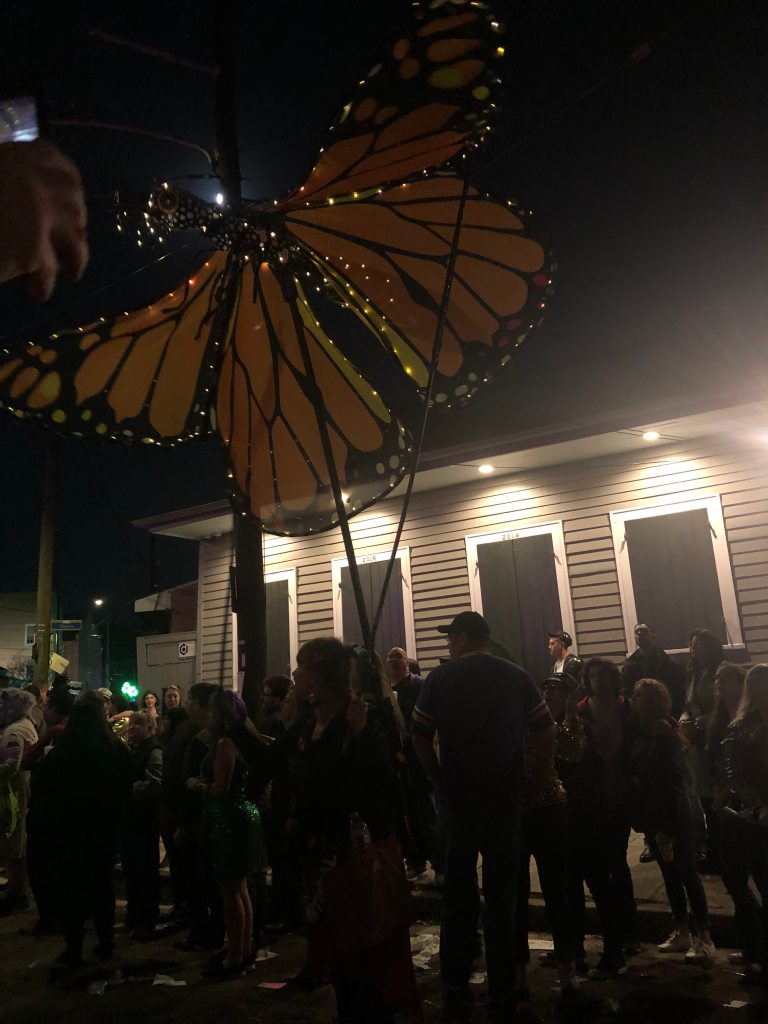
This time was to celebrate our 25th anniversary, and our kids are older and self-sufficient, so just the two of us went. It was during Carnival season, not to be confused with Mardi Gras weekend/day. We didn’t realize until our first trip, that New Orleans celebrates and has parades basically every weekend from Twelfth Night (January 6th) until Mardi Gras/Fat Tuesday (the day before Ash Wednesday, the start of Lent). There are hundreds of parading krewes and marching bands, so Carnival season is much more than the days leading up to Lent. This time we were able to stay in the French Quarter and enjoy the smaller, more local parades through the Quarter that happen a few weeks before Mardi Gras. There aren’t as many people packed in the streets so you have room to relax and take everything in.
There is something elementally fascinating about New Orleans. As a book-reader, music-lover, history-loving, research-loving, all around nerdy type, I have read dozens and dozens of non-fiction books about and fictional books set in New Orleans since our first trip. I have even read and taken notes on a few of the books that are recommended reading for those who want to take the test to be an official tour guide for the city! I’m not completely sure why it speaks to me–a northern farm girl 1500 miles from either ocean or the gulf coast.
Part of it involves the extensive history, I’m sure. Long before most of the country was settled, New Orleans already had deeply settled roots, and those roots were vastly different than the towns and cities along the east coast. Louisiana was claimed for France by Rene-Robert Cavelier, Sieur de La Salle in 1682, and the city of New Orleans itself was founded in 1717. The city celebrated 300 years in 2017. By comparison, New Amsterdam was settled in 1624-1626 and became New York City in 1664. Boston was settled in 1630, and Philadelphia in 1682–the same year La Salle reached Louisiana. My own hometown wasn’t founded until 1882. When Napoleon sold the Louisiana Territory to the United States in 1803, New Orleans had almost 100 years of history already, and they viewed the Americans as ignorant barbarians. They continued to hang on to their language and customs, ignoring the growing American sector, on the upriver side of Canal Street.
One major difference between many of those old east coast cities and New Orleans was who founded it. New Orleans’ early years were 100% French and so much of that influence is still seen today. New England was settled by the Pilgrims, the Puritans, the Dutch, the English, etc. Many of the earliest settlers came to the New World to find religious freedom. On the other hand, Louisiana was claimed by the French with the hope that the territory would be a moneymaker for France. In order to populate the territory, France forced the poor and prisoners to board ships and set sail for Louisiana. Early settlers of New Orleans were as far from the Puritans as it was possible to be. They were Catholic, but in a very relaxed way. Very much opposite of the strait laced Puritans.
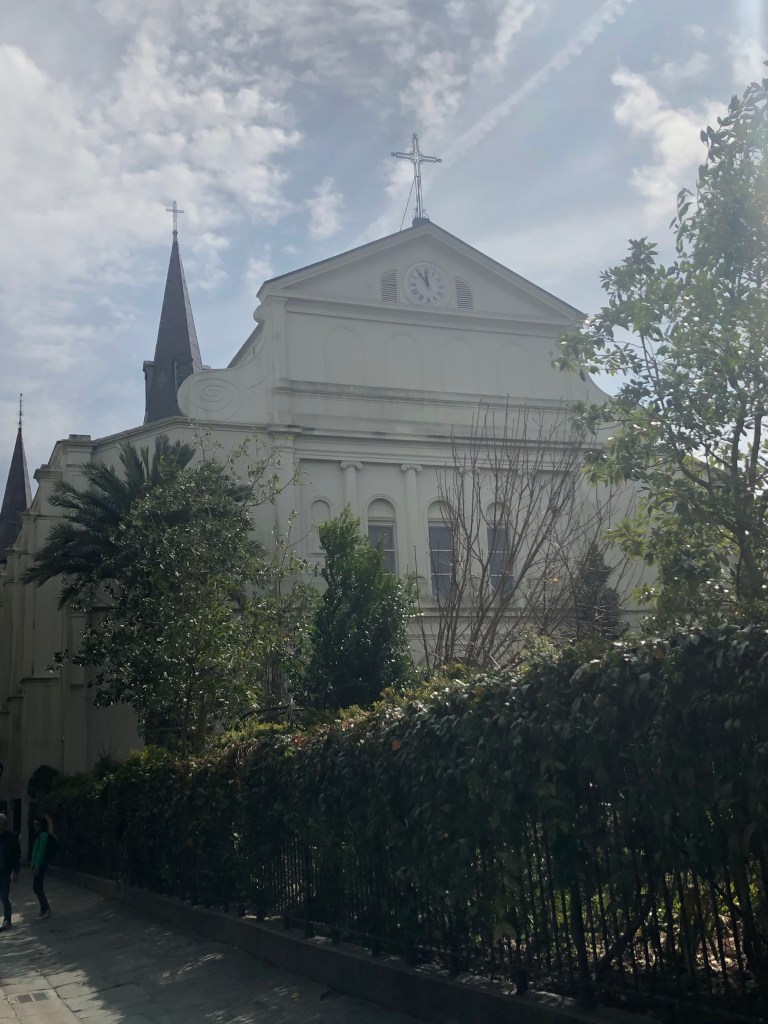
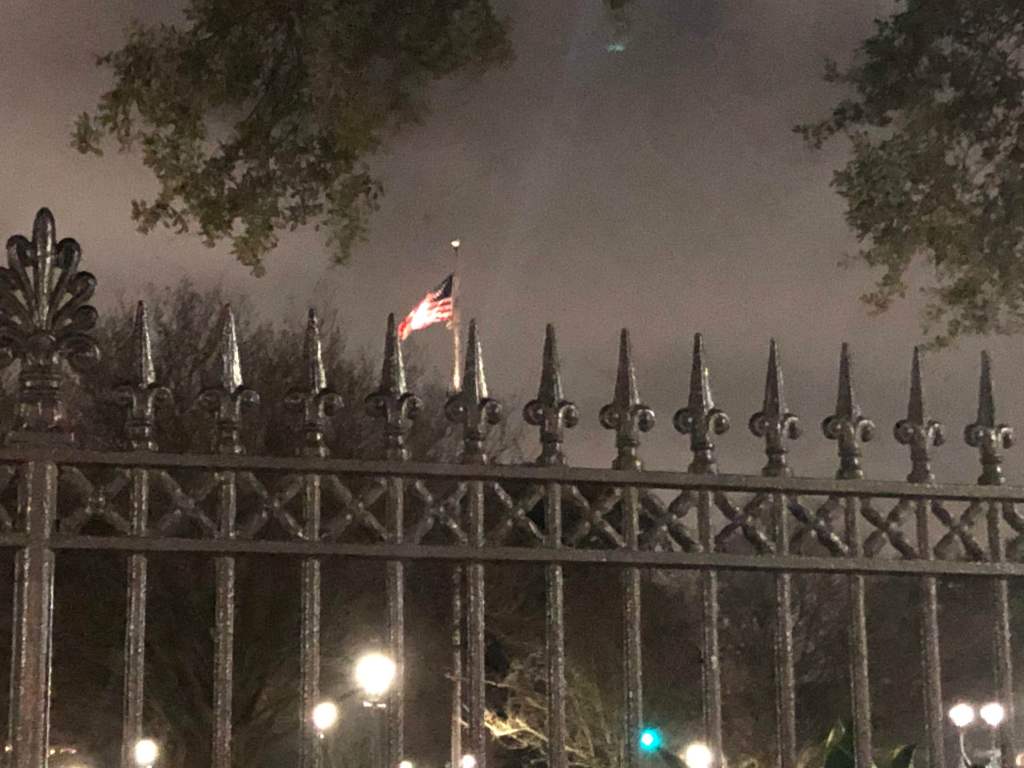
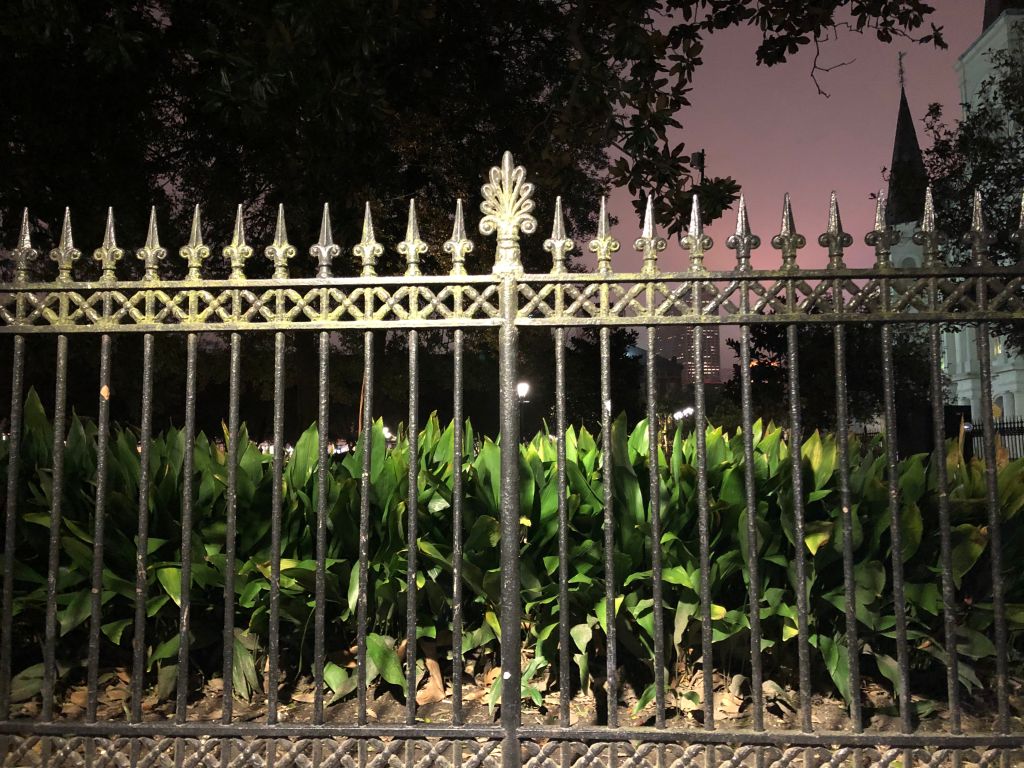
Another beautiful part of New Orleans so different from the rest of the country is the architecture. Though settled by the French, most of the buildings in the French Quarter reflect the Spanish style. The lacy ironwork and the courtyards that are so beautiful showed up after most of the original buildings burned in 1788 and 1794. By that time, New Orleans was under Spanish control (since 1763), so the city was rebuilt with a Spanish-American influence. I could walk around the Quarter just studying the buildings for days. Even the cracks and decay evident in many of the houses are beautiful.
And the music–(sigh)! I love how there are brass bands and buskers playing everywhere. One night on our way back to our hotel, we just stood and listened to a violinist for quite a while. I am not necessarily a fan of the more modern, smooth jazz, but the old stuff from the 1920’s and 30’s is so amazing to me. They were creating an entirely new genre and art form, which is now steeped in history. I recently watched a 10 episode documentary called Jazz on Amazon prime video and learned so much. Wynton Marsalis is interviewed heavily, as well as many others.
I also love the river. Rivers are everywhere throughout the country, but there is nothing like the Mississippi. The Gulf of Mexico is the destination of 2,320 miles of water, starting at Lake Itasca, Minnesota. We were able to travel from the port of New Orleans all the way into the gulf, which is about 100 miles, on a cruise ship as part of a cruise to Mexico and it was fun to watch all the little towns and swampy areas float by.
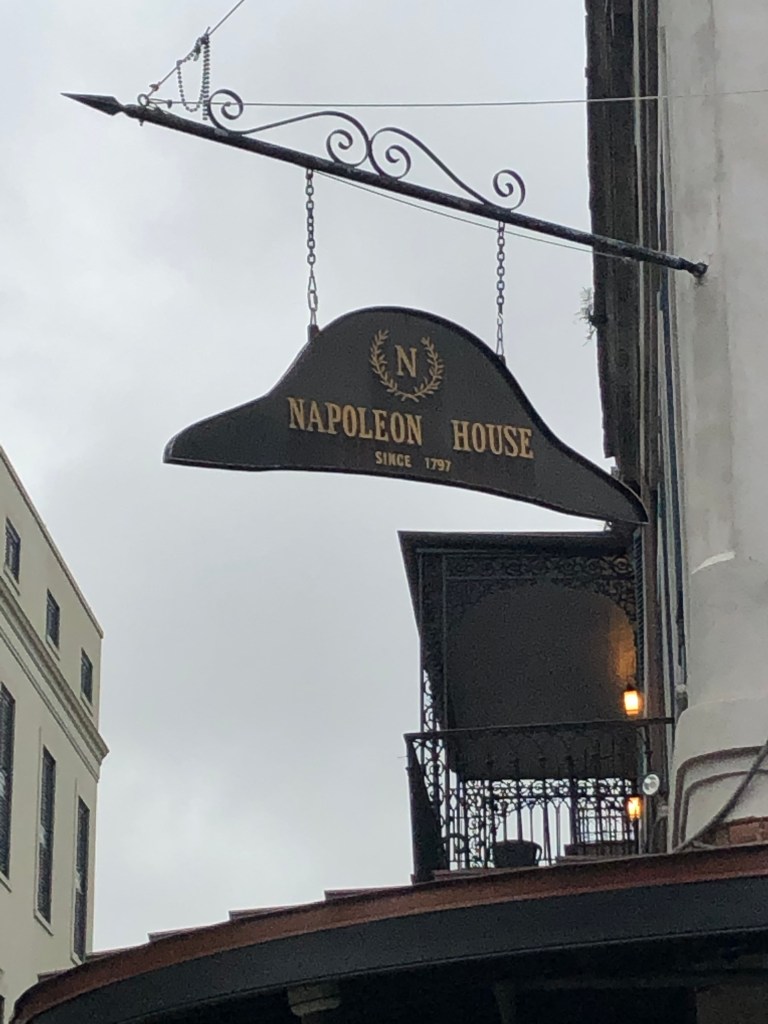
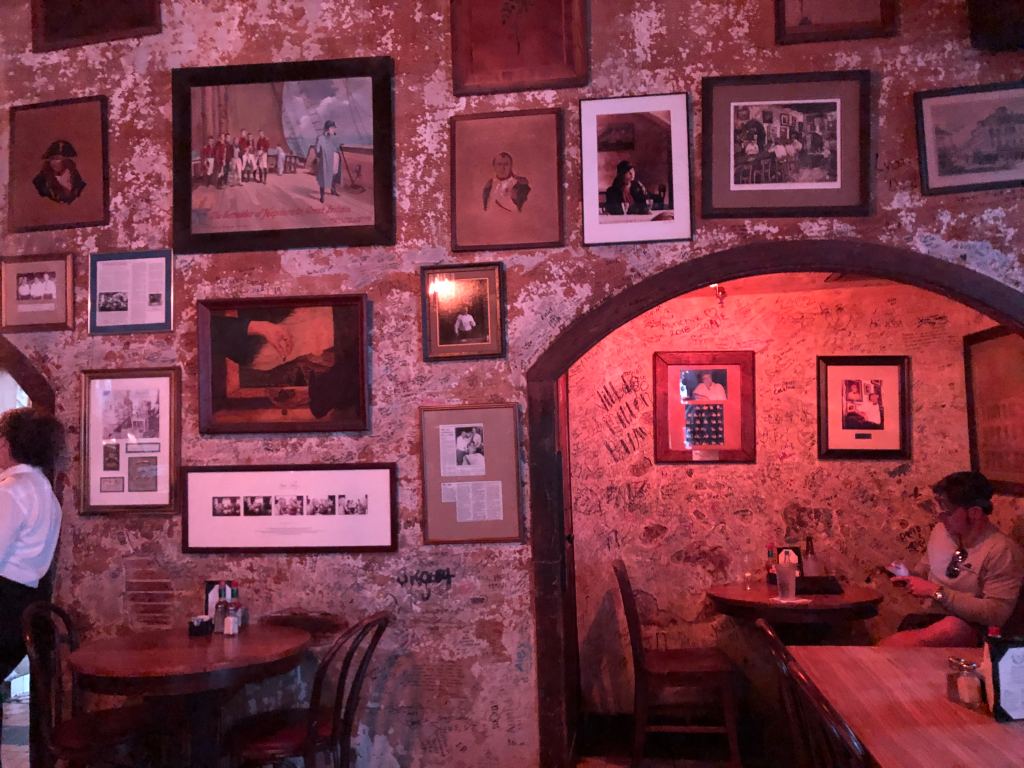
On our first trip we made sure to do the things the kids wanted to do most: a plantation tour, a tour of St. Louis Cemetery #1, and the World War II Museum. We also ate at several of the amazing restaurants including, The Famous Gumbo Pot, Port of Call, and Mother’s. This second trip was more about the food: Muffulettas at Central Grocery, red beans and rice at Cafe Pontalba, turtle soup at Commander’s Palace, Royal Sushi, pizza at Mona Lisa Restaurant, oysters and crawfish at the French Market, and gumbo at Napoleon House. Po’ Boys, jambalaya, boudin, beignets–we’ve tried it all and still haven’t even scratched the surface!








 Roots and Wings
One reply on “New Orleans, the French Quarter”
A good friend of mine is from New Orleans and she told me so many interesting and good things about the city that I really want to go there 🙂 it was nice to read your impressions about New Orleans too! Stay safe and greetings from Lisbon, PedroL
LikeLiked by 1 person